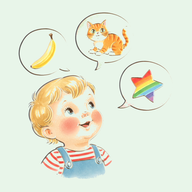
Is Screen Time Okay for Toddlers Learning Words
Screen time can support early word learning, but only when used interactively alongside an adult who bridges digital images to real-world objects. Young toddlers struggle to learn language from solitary or passive viewing, as their brains require personal interaction and clear auditory cues to map new vocabulary effectively. When media is simple, slow-paced, and accompanied by live conversation, digital tools can provide clear visual and phonetic references for everyday words.
Why passive viewing fails to build vocabulary
Toddlers learn words primarily through social interaction. When an adult points to a physical ball and speaks the word, the child processes a rich set of contextual cues: eye gaze, body language, tone of voice, and three-dimensional depth. In contrast, standard video content presented on a screen lacks this direct social feedback. Young children often view two-dimensional screens as self-contained entertainment rather than a representation of the physical world. This gap in understanding makes it difficult for a toddler left alone with a video to generalise a word heard on screen to an object in their living room.
For media to communicate meaning, an adult must actively create joint attention. Joint attention occurs when a parent and toddler focus on the same picture or object together while communicating about it. When you sit next to a toddler, look at what they are looking at, and repeat the spoken word, you validate that the image on the screen corresponds to a real-world concept. Without this human bridge, digital audio and video remain background noise that rarely translates into expressive speech.
How fast media disrupts word learning
The rate at which visual information changes on screen heavily influences how well a toddler retains vocabulary. Modern children's television and entertainment applications frequently feature rapid camera cuts, shifting angles, bright particle effects, and constant background music. While these elements hold a toddler's attention, they do so by overstimulating the visual system rather than fostering comprehension. The toddler's processing bandwidth becomes consumed by tracking movement, leaving little cognitive room to isolate individual words or understand what those words mean.
Effective language tools for toddlers operate at a much slower tempo. A static picture paired with an isolated spoken word gives the child time to process the phonemes, examine the shape of the object, and attach the vocal label to the visual representation. Calm tools like Language Board present static, hand-illustrated pictures paired with recorded native-speaker audio when touched, eliminating background music, rapid cuts, and ad interruptions that disrupt focus. Removing excessive animation allows the child to focus entirely on the connection between the sound and the image.
Sound clarity and phonetic input
A toddler's ear is constantly tuning itself to the distinct sounds of human language. To learn a new word, the child must clearly distinguish subtle variations between consonants and vowels. Many general-purpose media programmes feature character voices that are artificially pitched, exaggerated, or obscured by dramatic sound effects and ambient soundtracks. This acoustic clutter makes it difficult for a toddler to discern where one word ends and the next begins, slowing down phonemic development.
Clear speech audio, spoken by real human voices without background noise, provides the clean phonetic input toddlers need. When a child hears a word pronounced distinctly at a natural pace, they can analyse its constituent sounds and attempt to copy them. Repeating the sound aloud immediately after hearing it reinforces the neurological pathway between listening and speaking, provided the audio environment remains free from competing noise.
Bridging digital words to the physical world
Screen-based word learning should never exist in isolation. The primary value of a digital vocabulary tool is to expand the variety of images and sounds a toddler encounters, serving as an interactive picture book. To ensure that digital words become part of a toddler's functional vocabulary, you can apply several practical techniques during shared screen time.
- Point to the screen while naming the object clearly, encouraging the child to look between your face and the display.
- Pause frequently to ask simple questions or give the toddler time to vocalise their own attempt at the word.
- Connect screen images directly to physical items in your home, such as pointing to an illustration of a shoe and then pointing to the child's own shoe.
- Use physical gestures, such as mimicking the action of eating when viewing food items, to reinforce the word's meaning through movement.
By maintaining a direct connection between digital media and hands-on experience, screen time becomes a structured extension of everyday speech. When used deliberately alongside responsive adult conversation, calm and focused screen tools help toddlers build clear associations between spoken sounds, visual representations, and the real world around them.