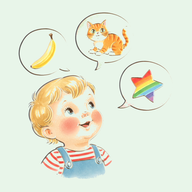
Best First Words to Teach a Toddler
The best first words to teach a toddler are functional terms that allow them to express immediate physical needs and control their environment. Rather than focusing strictly on naming objects like animals or colours, a balanced early vocabulary prioritises words that let a child request help, signal the end of an activity, or comment on daily routines. Building speech around words with high personal utility gives toddlers a practical reason to communicate.
Core functional words that give toddlers control
When choosing words to teach a toddler, start with vocabulary that delivers a clear, immediate outcome for the child. Functional communication reduces frustration because it gives the child a verbal alternative to crying or gesturing when they want something to start, stop, or change.
Words like 'more', 'help', 'stop', 'go', 'again', 'up', 'open', and 'all gone' are far more useful to a young child than the names of secondary colours or obscure shapes. When a toddler says 'help' and an adult immediately assists them with a stuck toy, the child quickly grasps the cause-and-effect power of spoken language.
- Requesting words: 'more', 'help', 'open', 'again', 'up'
- Transition and boundary words: 'stop', 'go', 'all gone', 'wait', 'no'
- Social turn-taking words: 'hi', 'bye-bye', 'please', 'thank you'
Everyday nouns and high-interest objects
Once functional requests are established, expand into concrete nouns that represent items the child sees, touches, or uses multiple times every day. Broad categories like zoo animals are popular, but focus first on specific objects that belong to the child's direct routine.
Food items such as 'milk', 'water', 'apple', and 'banana', alongside clothing items like 'shoe', 'sock', and 'hat', provide repeated daily opportunities for practice. Body parts—such as 'eyes', 'nose', 'feet', and 'hands'—are also ideal because they are always accessible during dressing, bathing, and play routines.
High-interest items like 'ball', 'car', 'dog', or 'baby' naturally motivate toddlers to point and speak. Combining spoken words with clear visual references helps solidify these connections. Calm visual tools, such as Language Board, present hand-illustrated everyday objects with clear recorded pronunciations when tapped, allowing toddlers to link spoken audio directly to recognised images.
Action words and simple descriptors
Nouns alone limit a toddler to pointing and naming objects. To help a child eventually build two-word phrases, introduce simple verbs and descriptive words alongside everyday nouns. Action words give toddlers the structural foundation they need to combine concepts as their communication matures.
Essential action words include 'eat', 'drink', 'sleep', 'wash', 'sit', 'run', 'look', and 'fall'. Pairing a verb with an existing noun—such as saying 'drink water' or 'eat apple' during mealtimes—demonstrates how words fit together without putting pressure on the child to replicate the full phrase immediately.
Descriptors should focus on noticeable physical states and contrasts. Words like 'hot', 'cold', 'big', 'wet', 'dirty', and 'sticky' allow toddlers to share observations about their sensory experience. Noting 'hot' when touching warm food or 'wet' during bath time helps anchor these concepts in physical reality.
How to introduce new words naturally
Toddlers acquire language best through repetition within familiar routines, rather than through formal drills or artificial testing. Narrate everyday tasks as they happen, using short, clear sentences where key target words are slightly emphasised.
When introducing a new word, position yourself at eye level with the child so they can observe both your face and the object you are describing. Repeat the target word several times across different contexts. For example, during dressing, you might say, 'Here is your shoe. On goes the shoe. Where is the other shoe?'
Give the toddler time to process what they hear. Young children often require several seconds to interpret spoken language and formulate a response. Pausing expectantly after making a statement creates a natural opening for them to speak without feeling rushed or overwhelmed.
Common mistakes when building early vocabulary
A frequent mistake is continually quizzing a toddler by asking 'What is this?' or 'Can you say banana?'. Constant quizzing turns language into a performance task, which can cause cautious toddlers to clam up. Focus instead on commenting directly on whatever the child is watching or touching.
Another error is anticipating every need before the child has a chance to communicate. If a child points to a cup on a counter and it is immediately handed to them in silence, there is no functional need for them to attempt words like 'water' or 'cup'. Wait briefly, model the target word clearly, and offer a moment for them to attempt a vocalisation before handing over the item.
Finally, avoid correcting mispronunciations directly. If a toddler points to a cat and says 'ca', do not say 'No, say cat'. Instead, recast the word correctly within a natural reply: 'Yes, that is a cat.' This provides a clear pronunciation model while reinforcing their successful effort to communicate.