The Best Age to Start Teaching a Child a Second Language
A child can start learning a second language at any age, but starting before the age of three takes unique advantage of how the infant brain processes speech sounds. Language acquisition in early childhood relies on unconscious absorption through context and daily interaction rather than explicit grammar rules. While older children and adults can still achieve high fluency, early exposure makes native pronunciation and effortless bilingualism significantly easier to attain.
Phonetic tuning in the first year of life
During the first year of life, a child's auditory system is capable of distinguishing every distinct phonetic sound used in human speech. Infants listen to the speech patterns around them and gradually map out the specific sound catalogue of their environment. By roughly twelve months of age, the brain begins a process of phonetic tuning, discarding sensitivity to sounds that it does not hear regularly. This biological narrowing allows the child to process their primary language efficiently, but it also means that unexposed foreign phonemes become harder to distinguish later in life.
Introducing a second language during infancy preserves this universal sound sensitivity. When a baby hears native speakers across two languages, their brain creates dedicated neural categories for the vowels, consonants, and tonal shifts of both systems. This early exposure forms the foundation for accurate pronunciation and accent-free speech. An infant does not need to understand word meanings to benefit from this stage; simply hearing authentic, varied speech sounds in meaningful social contexts keeps the brain receptive to foreign phonetics.
Direct vocabulary building from ages two to four
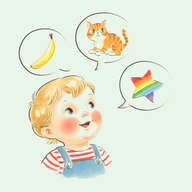
Between the ages of two and four, children undergo a period of rapid vocabulary expansion. At this stage, language acquisition occurs through direct association with the immediate physical environment. Toddlers do not translate words from one language to another; instead, they attach verbal labels directly to objects, actions, and emotions. If a child sees a cat and hears two different words for it in different contexts, they store both words as valid representations of the animal.
Teaching a second language at this age works best when tied to concrete items and daily routines. For toddlers and preschoolers aged two to six, quiet tools such as Language Board provide targeted exposure by pairing hand-illustrated everyday objects with clear audio recordings in a chosen target language. Because young children absorb vocabulary by connecting physical images directly to native pronunciations, this form of direct association builds early comprehension without requiring translation or formal instruction.
Parents should expect minor mixing of languages during early childhood. A child may use a word from one language inside a sentence spoken in another. This is not a sign of confusion or cognitive overload, but rather a normal demonstration that the child is drawing from a single, unified mental lexicon to express themselves as quickly as possible.
The shift toward explicit learning after age seven
Around the age of six or seven, cognitive development introduces a structural shift in how children learn. As children develop literacy and abstract reasoning skills, they begin to process language analytically. They start to understand that languages have systematic rules, explicit grammar structures, and formal writing systems.
This cognitive shift brings both advantages and trade-offs. Older children can often learn vocabulary faster than toddlers because they already understand abstract concepts and can use reading and memory strategies. However, their reliance on their primary language increases. They are more likely to translate back and forth in their minds, which can slow down natural fluency and make native-sounding pronunciation more challenging to achieve. While early childhood acquisition feels effortless and subconscious, learning a language after age seven requires more conscious effort and deliberate practice.
Tailoring language exposure to your child's age
Because the brain processes language differently at each stage of development, the methods used to introduce a second language should match the child's age. Attempting formal drills with a toddler or relying purely on passive background audio with an older child reduces the effectiveness of the effort.
- Birth to 18 months: Prioritise live spoken interactions, face-to-face vocal repetition, and native speech during everyday caregiving routines.
- 19 months to 4 years: Focus on direct naming of physical objects, interactive play, context-based phrases, and visual audio associations.
- 5 to 7 years: Use storybooks, structured games, call-and-response conversation, and guided play that combines listening with basic speaking opportunities.
- 8 years and older: Incorporate conversational practice, beginner reading, explicit grammar explanations, and immersive media with clear native speech.
Balancing exposure time and consistency
The age at which a child starts learning a language is only one factor in achieving fluency. The volume and consistency of high-quality exposure are equally critical. A child who begins learning a second language at age two but only hears it for fifteen minutes a week will progress far slower than a child who starts at age eight with several hours of meaningful, daily interaction.
To build functional ability, exposure must be regular and interactive. Methods such as the one-person-one-language approach, where one parent speaks exclusively in the target language, ensure that the child receives consistent daily input. Where full immersion is not possible, integrating language into set daily routines—such as mealtimes, bedtime reading, or focused quiet play—creates dependable daily touchpoints that allow vocabulary to consolidate naturally over time.