How to teach a toddler a second language at home
Teaching a toddler a second language at home requires establishing consistent daily routines where the target language is used naturally alongside concrete actions. Rather than formal instruction, young children acquire language by hearing full sentences in real-time context and associating specific speakers or settings with that language. Success depends on maintaining clear boundary systems and encouraging real conversation rather than testing vocabulary.
Establish a clear structure for language exposure
Young children do not learn a second language through deliberate study, grammar drills, or translation exercises. They pick up speech by mapping sounds directly onto physical actions, objects, and social interactions. To make this process work at home, you must establish a clear structural strategy that determines when and how the target language is used, ensuring your toddler receives regular, predictable exposure without becoming confused.
The two most effective structural strategies for home environments are One Parent, One Language and Time and Place. In the One Parent, One Language model, one parent speaks exclusively in the target language to the child, while the other parent uses the dominant community language. This system creates a clear personal association between the speaker and the language. The child quickly realises that communicating with that parent requires using a specific vocabulary.
If both parents share the same native language or if only one parent is attempting to introduce a non-native second language, the Time and Place model is more practical. Under this approach, specific blocks of time or specific locations inside the home are designated exclusively for the second language. For instance, you might commit to speaking only the target language during morning routines, at dinner, or during outdoor play in the afternoon. Whatever structure you choose, consistency is critical. A toddler needs to hear the target language every day in substantial, unbroken periods to build real comprehension.
Connect language to physical routines and actions
Toddlers absorb language best when words directly accompany physical sensations and visible activities. Passive background sound, such as an audio track playing in another room, has almost no impact on language acquisition at this age. You must actively speak about whatever your child is touching, looking at, or doing at that exact second.
Use daily care routines as primary anchor points for conversation. Bath time, getting dressed, preparing meals, and tidying up toys provide ideal repetitive contexts where vocabulary naturally recurs every day. During these routines, describe every step out loud using complete sentences rather than isolated nouns.
- During dressing, name garments, body parts, and actions continuously, such as putting a left foot into a blue shoe.
- During meal times, describe flavours, temperatures, utensil names, and actions like pouring, cutting, or wiping the table.
- During outdoor walks, comment on physical movements, weather conditions, animals, vehicles, and colours in the immediate environment.
Resist the temptation to point at an object and simply recite a single noun in the target language. Single words lack grammatical context and rhythmic cadence. Instead of pointing at a cup and saying the target word for cup, say a full, natural phrase such as 'Here is your blue cup, let us fill it with water.' This gives your toddler exposure to prepositions, verbs, and sentence structures alongside the noun itself.
Combine simple visual representations with clear audio
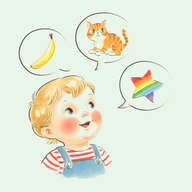
While real-world interaction forms the core of language learning, visual aids can help broaden vocabulary beyond the immediate items present in your home. Toddlers learn best when a visual image is paired immediately with a clean, accurate pronunciation, allowing them to form a direct connection between the visual concept and the spoken word without relying on translation.
When incorporating digital visual tools during quiet play periods, select calm, non-stimulating options that focus purely on core language skills. Tools like Language Board provide a calm visual layout with 210 hand-illustrated everyday objects where tapping an image plays a recorded native-speaker pronunciation in the chosen language. This allows a toddler to hear correct phonetic sounds in isolation while looking directly at the corresponding image, reinforcing clear visual-auditory associations.
Always follow up digital or visual interactions with immediate real-world conversation. If your toddler interacts with the image of an apple or an elephant, talk about that item in your second language immediately afterwards. Ask questions about the colour of the apple, or mime the movement of the elephant together. Connecting static visual media back into live physical play ensures that new words are retained and integrated into active comprehension.
Avoid translation and manage mixing naturally
A common mistake when teaching a second language at home is asking a toddler to translate words on demand. Questions such as 'What is the word for cat in Spanish?' or 'How do you say milk in French?' force the child to filter concepts through their dominant language. This slows down natural processing and often leads to frustration or silence.
Speak directly in the target language without providing an immediate translation in the majority language. If you say a phrase in the second language and your child looks confused, repeat the sentence more slowly while using exaggerated physical gestures, facial expressions, or pointing to demonstrate the meaning. Your child will learn to infer meaning directly from context, which builds genuine fluency.
It is entirely normal for toddlers acquiring two languages to mix words from both tongues within a single sentence. This is known as code-switching and is a natural phase of bilingual development, not a sign of confusion. Never scold, correct, or punish your child for mixing languages.
When your child uses a word from the majority language while speaking to you in the target language, validate their thought and model the correct expression naturally. If your child points at a dog and uses the majority language word, respond enthusiastically in the target language using the correct target noun. By repeating the thought back to them in full, correct language, you provide the missing vocabulary without creating anxiety around speech.
Use interactive reading and shared attention
Reading books together is one of the most effective ways to build target language depth at home. Choose picture books with clear, colourful illustrations and simple text. When reading in the second language, you do not need to strictly read the exact words printed on the page. Use the illustrations as a launching pad for interactive dialogue.
- Pause on each page to point out details in the pictures, describing actions, feelings, and objects in the target language.
- Ask open questions that encourage your toddler to point or speak, such as asking where an animal is hiding or what a character is doing next.
- Leave generous pauses after asking a question, giving your toddler at least five to ten seconds to process the sound and attempt a response.
Combine reading with interactive songs and nursery rhymes in the target language. Songs use repetitive rhythms, rhymes, and hand gestures that make phonetic patterns memorable for young children. Singing the same songs during daily transitions, such as a tidying-up song or a bedtime lullaby, creates strong auditory routines that anchor language learning naturally into your home life.